From the newsletter
How to plan a week of food around your training
The fueling loop from issue 14, on one page: one big shop, one big cook, a top-up — and what reheats, what doesn't, the plant-based basket, and the rule for eating a little less without training lighter.
A caveat before we start: this is the 80/20 version — simple guidelines and principles. There's more nuance underneath, but thinking about it this way makes everything simpler.
Four categories, one that moves
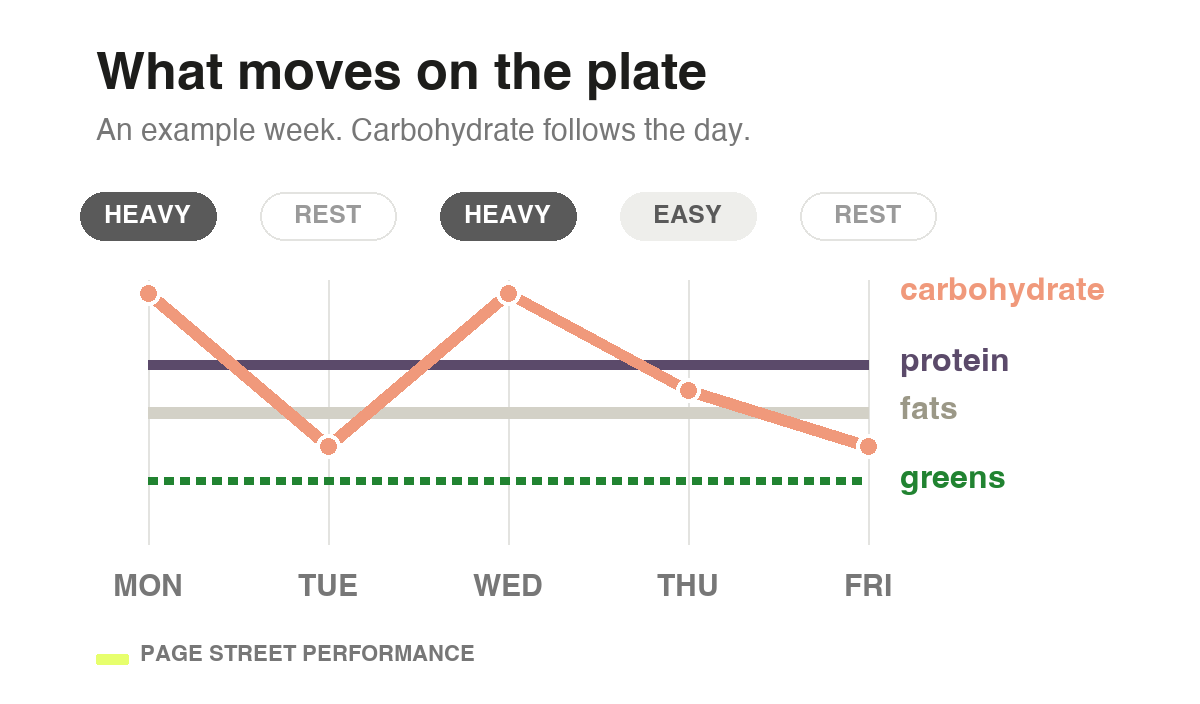
Protein, fats, carbohydrate, and greens — vegetables, broadly. Protein, fats and greens stay consistent from day to day and meal to meal. Carbohydrate is the one that moves, and it moves with the training.
It goes up on the higher-intensity, longer sessions, because that's the energy the work runs on. It comes down on rest days and easy aerobic days, when a bigger share of the fuel comes from body fat rather than the plate.
Read the training week first
The planning is looking forward into the training week: which days are heavy, which are easy, which are rest, and what the plates will need. Then you pick things from the list that fill those four categories.
And you're in luck: most of it cooks in bulk and keeps in the fridge for a few days. In the unlikely event that you cook enough — it's genuinely hard to cook a whole week in one go — the overflow freezes for the following week.
Rice and sweet potatoes reheat. Roasted vegetables keep. Meat and tofu reheat too. Fats — avocado, nuts, nut butter, hummus — you don't need to cook at all. Really the only things you may need to freshen up are the delicate greens, or a piece of fish if you want it properly fresh.
My basket
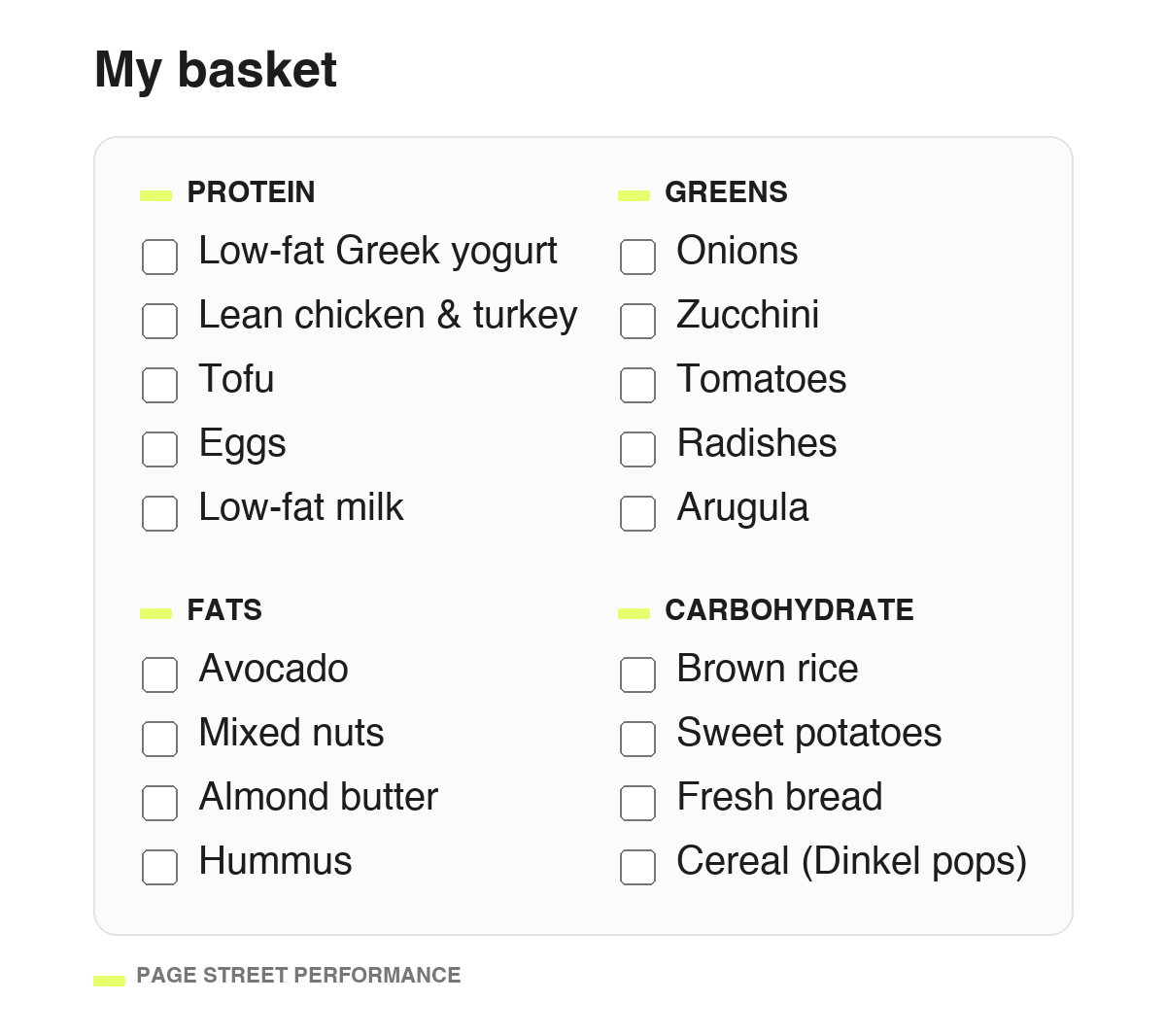
What I actually bought on Monday.
The basket, plant-based
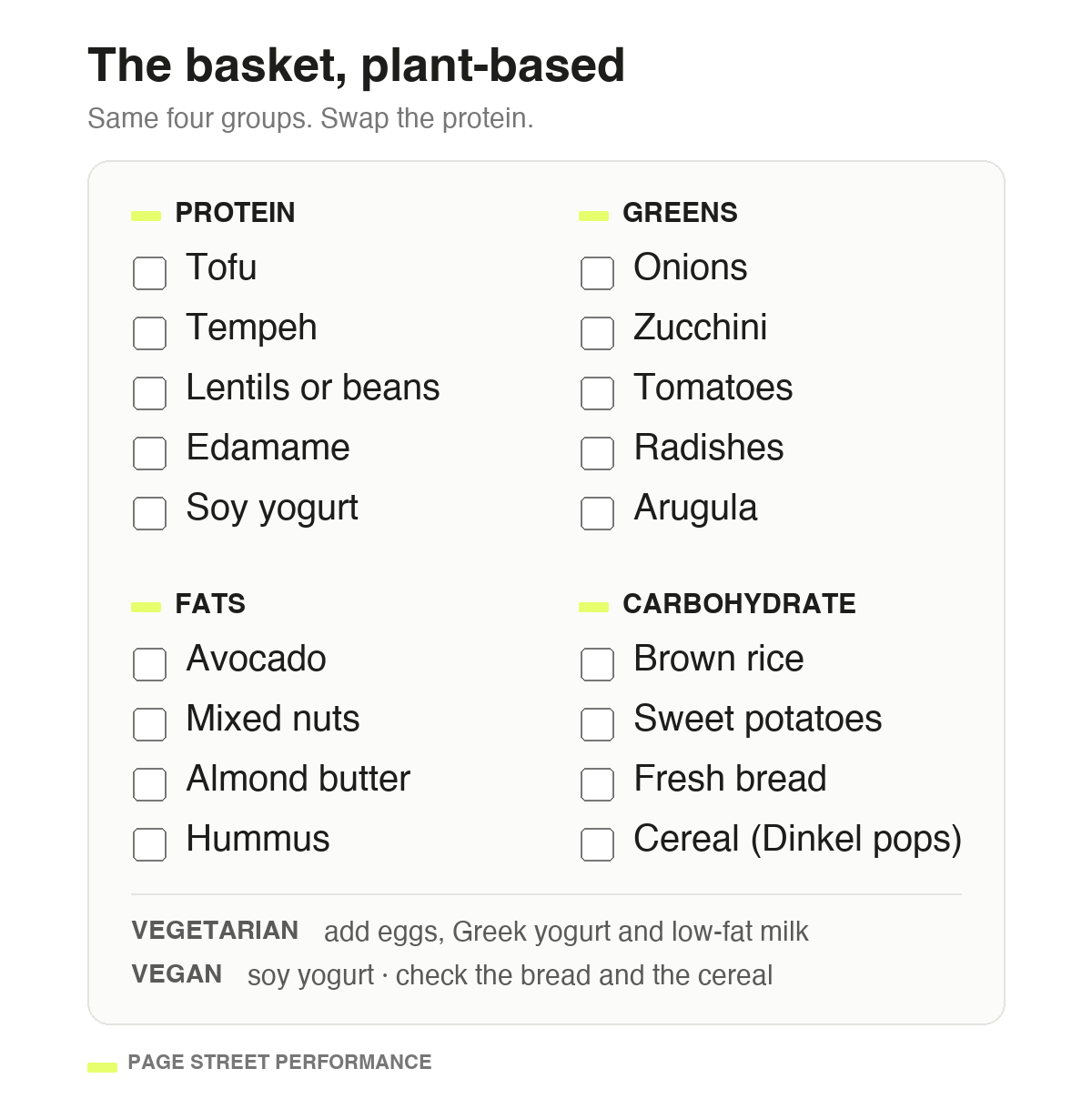
Same four groups; swap the protein. Tofu, tempeh, lentils, beans, edamame and soy yogurt carry it. Vegetarian: add eggs, Greek yogurt and low-fat milk. Vegan: soy yogurt instead, and check the bread and the cereal.
The cook, the top-up, the loop
Just as you get in from the store: preheat the oven, get the protein into a quick marinade, chop the vegetables while it sits, and get cooking. Box it — fridge for this week, freezer for the overflow.
Mid-week, that freshening up is a run to the store, not the big haul from the start of the week. Lunch goes to work already packed; one fresh thing on last night's rice and vegetables is breakfast.
So it runs as a loop: one big shop, one big cook, a top-up, and assembly the rest of the days — leftovers plus one fresh thing each meal.
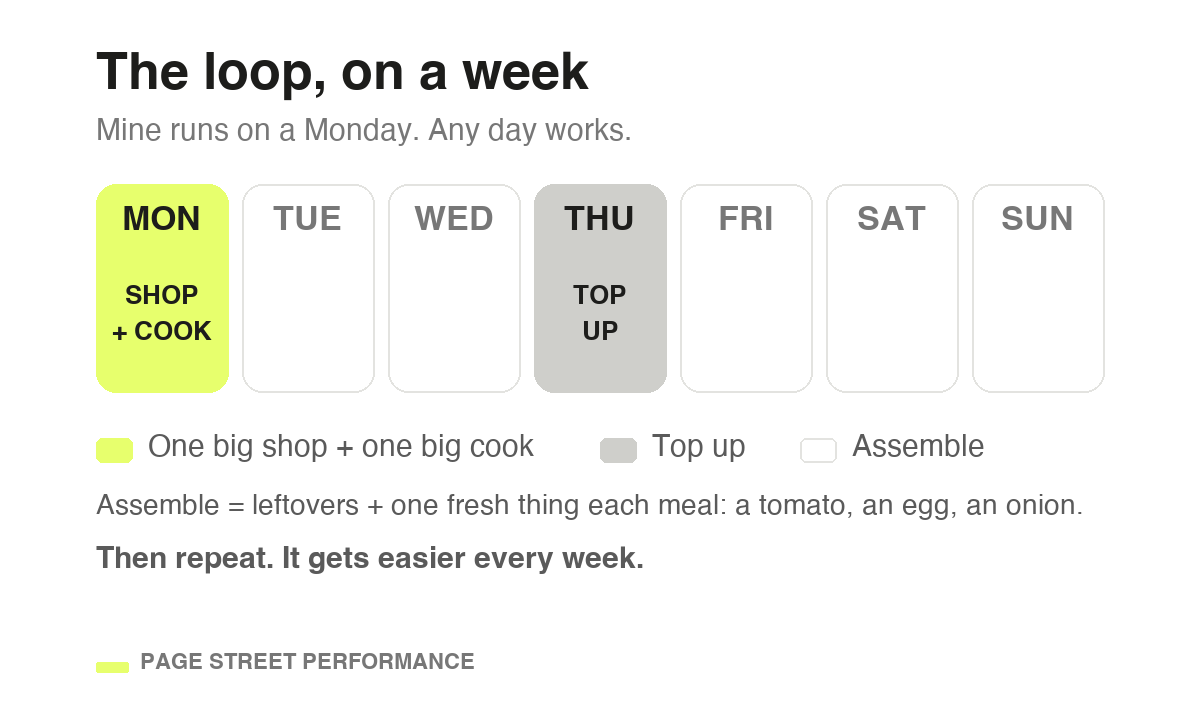
Mine runs on a Monday — markets here in Berlin are closed on Sundays. Any day works. The training week wrote the list; the shopping is just following it.
What actually survives the week
The single biggest reason batch cooking gets abandoned is that people batch the wrong things, eat something sad on Wednesday, and conclude the system doesn't work. It's not the system — it's the menu.
- Reheats well: braises, stews and ragù (genuinely better on day two) · thigh meat, pork shoulder, beef · tofu and tempeh · rice, sweet potatoes, farro, barley · lentils, beans, chickpeas · roast roots, squash, cauliflower · curries, chilli, soups.
- Reheats badly: anything breaded or crisped · lean chicken and turkey breast (reheat gently, or slice it cold into lunch) · fish (eat it cold, or buy it fresh mid-week) · delicate greens, cucumber, avocado · broccoli · fried eggs, anything with a crust.
Four rules do most of the work:
- Grain at the bottom of the container. It absorbs the moisture and steams the protein sitting above it.
- Undercook the veg slightly. The reheat finishes it. Otherwise it's mush by Wednesday.
- Sauce travels separately and goes on after heating. Sauce sitting on food overnight makes everything soggy, and creamy sauces split.
- The fresh thing gets added at the end — a tomato, an egg, an onion, herbs, lemon, something with crunch. That's the entire creative burden of a weekday, and it's what keeps day four from tasting like day one.
The flex valves
A system that only works when the forecast is perfect isn't a system — it's a test you'll eventually fail. So build in the two ways it's allowed to be wrong:
- Too much food is not a problem. That's friends coming over, or it's the freezer. Cooking over is cheap insurance, not waste.
- Too little isn't a problem either. That's the mid-week run, or the night you eat out on purpose, without it meaning anything about your week.
If you're eating less: the Recomp rule
Everything above runs one way: training week → plate → basket. The training decides the plate, and a lighter plate is never a reason for a lighter session.
Where this gets hardest is Recomp, one of our three tracks: change how the body is built — keep and build strength while getting leaner — which can mean deliberately eating less for a while. A deficit has to be managed carefully. Too far, and it zaps your energy: the session goes flat, the bar feels heavier than it is, the strength you've built stops showing up, and it can eat into the muscle you're trying to protect.
- The deficit stays modest.
- The training stays where it was — same lifts, same intensity.
- Protein doesn't come down with the rest of the plate the way carbohydrate does. If anything it goes up a little, so as a share of what you eat, it grows.
- Watch how the sessions feel, how you're recovering, and what your weight is doing over weeks rather than days. Then rebalance.
Eat a little less. Lift no lighter. Rebalance weekly. If the lifts stall or the soreness stops clearing, check the deficit first — rebalance it before you lift lighter. That's what the weekly check-in in the app is for: it asks about energy, recovery and fueling, takes your weight if you log it, and the targets follow the trend, week to week.
One system
Think about what the week's training asks. Build the plates that answer it. Write the shopping list off the plates. The point is to keep it unified, so you're not re-deciding food every day.
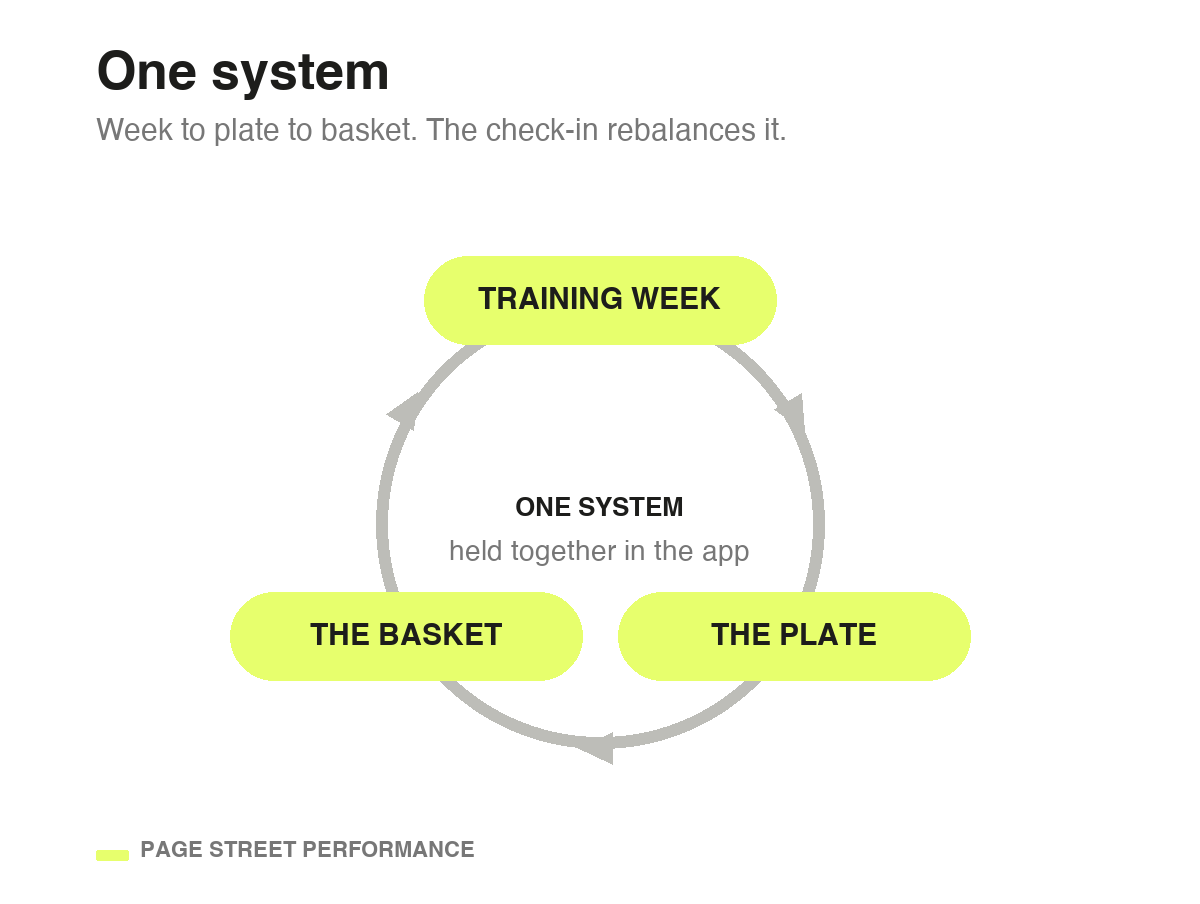
The app already carries the first two: every day in your plan is labelled, with the plate beside it and the target sized by your goal, and the weekly check-in keeps it balanced. The third step — the list — is the one I still write by hand.
Coming in October: the shopping list, built from your training week, inside the Page Street app, so the big shop is one trip and the top-up is obvious. Until then, this page is the by-hand version. Reply to the newsletter with the word LIST and I'll let you know when it ships.
The whole idea in one line: the training week wrote the list. I just did the shopping.
This is the companion page to a Page Street Performance newsletter issue. Read the newsletter · Back to home